Signal strength25%
Distance6 ft
Inverse-square law · 1 / d²
Wi-Fi signal drops off rapidly with distance.A small step back makes a large difference to signal strength.
Managing EMR is not about rejecting modern technology; it is about understanding how energy moves through our spaces so we can design healthy, balanced environments where families and teams thrive.

Just as you would test indoor air quality or water purity, discovering your baseline EMR profile is the first step toward informed space planning.
Electromagnetic Radiation (EMR) is energy that travels through space in the form of oscillating waves. Smartphones, Wi-Fi routers and 5G networks operate on non-ionizing radiofrequency (RF) radiation. Unlike ionizing radiation such as medical X-rays, non-ionizing signals carry information across distances through electromagnetic fields.
Think of wireless EMR like sound from a speaker: soft music across a room is gentle background noise; a speaker held against your ear continuously can cause fatigue; physical distance and volume control restore peace.
Tap a point on the house to see what is transmitting and why it matters.
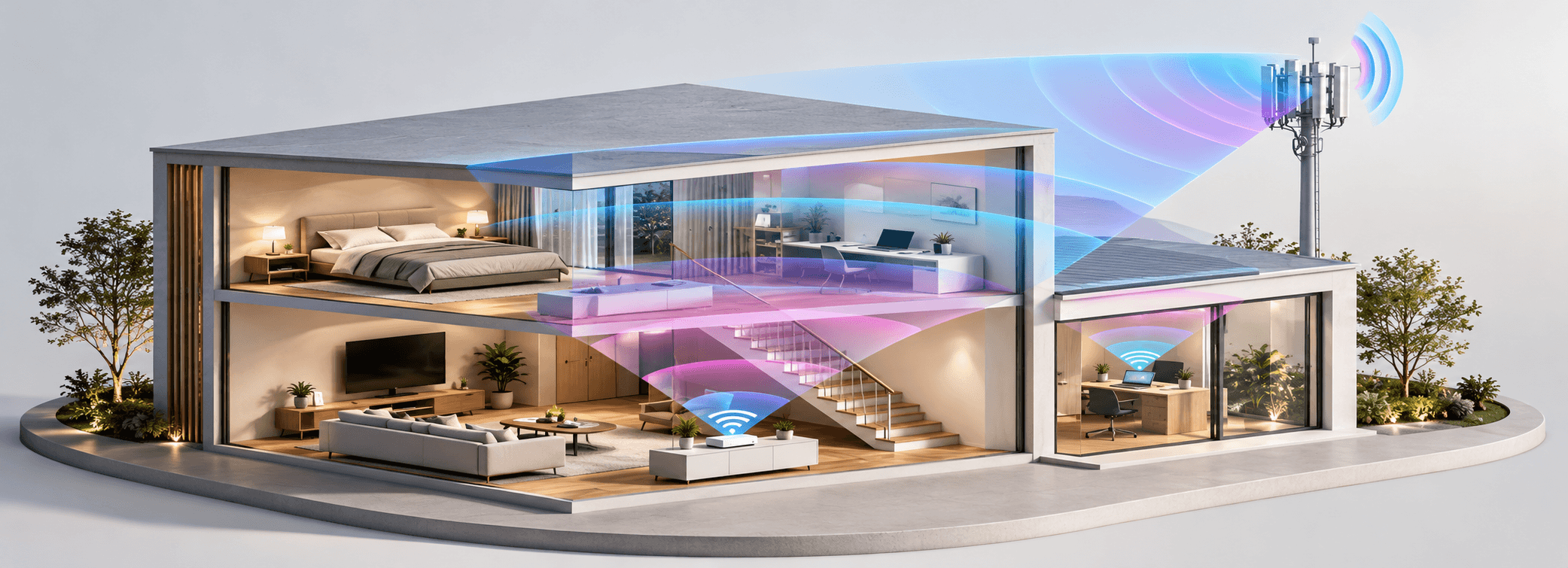
A structured walkthrough of your floor plan pinpoints which devices create unnecessary signal overlap, and helps streamline your wireless layout.
Wireless energy cannot be evaluated by phone signal bars or general Wi-Fi speed tests. Radiofrequency radiation is quantified as Power Density: the amount of wireless energy passing through a given surface area.
Illustration of a meter reading: a steady background with short bursts up to 2,187 µW/m², which is why peaks are measured as well as averages.
When you double your physical distance from an active wireless transmitter, exposure drops to one-fourth of its initial level; triple the distance, and it drops to one-ninth.
A small step back makes a large difference to signal strength.
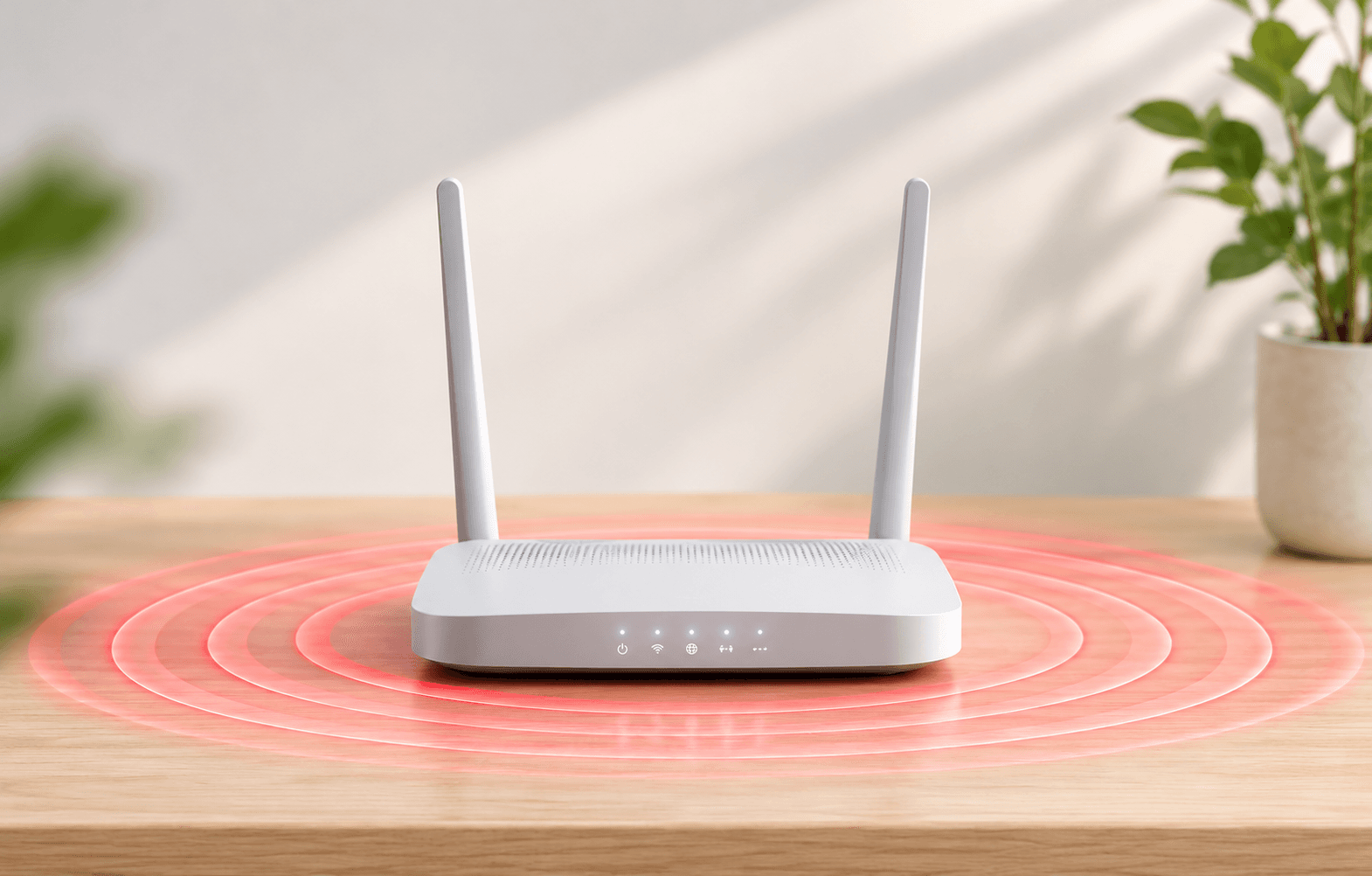
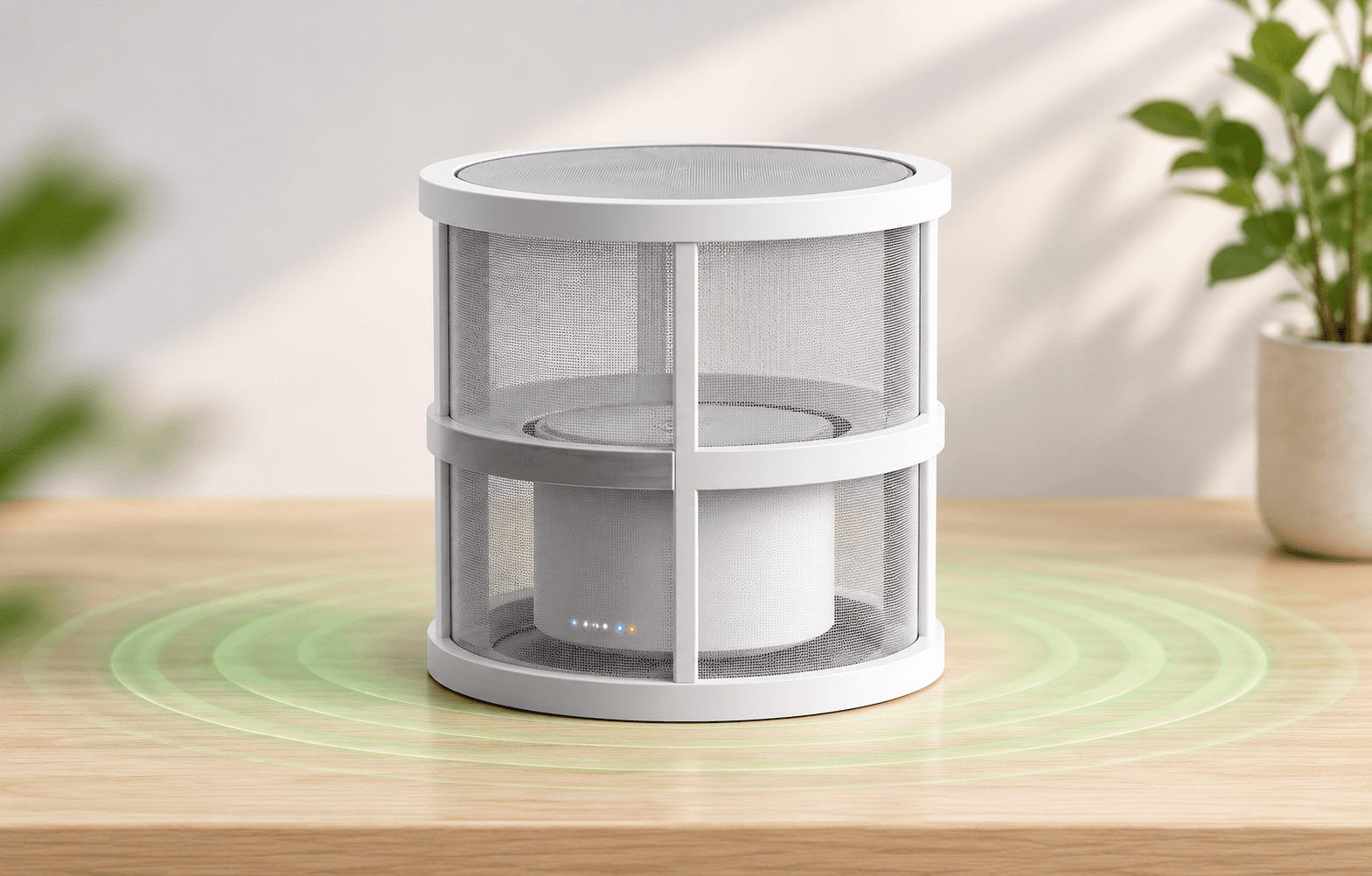
≈ 25% of the original signal, like standing 6 feet away, and still connected.
Peak vs. average matters. Devices can transmit in short, high-energy pulses during downloads or synchronisation. Night-time recovery is also highlighted in the source document as a priority for reducing ambient signals.
Official limits only protect the body from heating up. Precautionary guidance sets far lower targets for where people sleep. Your LiveSAFE report shows both.
The scale is logarithmic: each step is ten times the one before. Ranges are RF power density in sleeping zones.
No. Effective EMR management is spatial optimisation: hardwire fixed equipment where practical, place routers in lower-occupancy areas, and consider passive architectural shielding where appropriate.
This is attributed to thinner skull bones, higher tissue water content and developing neurological systems.
No. Apps report software-level connection strength; they do not have the broadband sensors needed to measure physical power density across multiple bands.
Keep phones off nightstands or use Airplane Mode while sleeping; keep your distance from routers; keep cordless phones away from beds and living areas; and use wired earphones or speakerphone for long calls.
A specialist visits with calibrated multi-axis testing equipment, measures internal and external sources across priority rooms, and provides a documented environmental report with practical steps.